

The decade was the late 1980s and I ran one of New York’s better-known small design firms. As a board member of The NY Chapter of the AIGA, American Institute of Graphic Arts, I was asked to moderate an event on successfully working with clients.
Every designer wants to know how to attract clients, make presentations, set objectives, manage the relationship, and achieve results that both the designer and client can be proud of. Certain design firms were winning the “best” clients and the coveted awards. Rather than invite the owners or partners of those firms to be on the panel, I invited the clients. Five knowledgeable clients said ‘yes.’
The hall was packed.
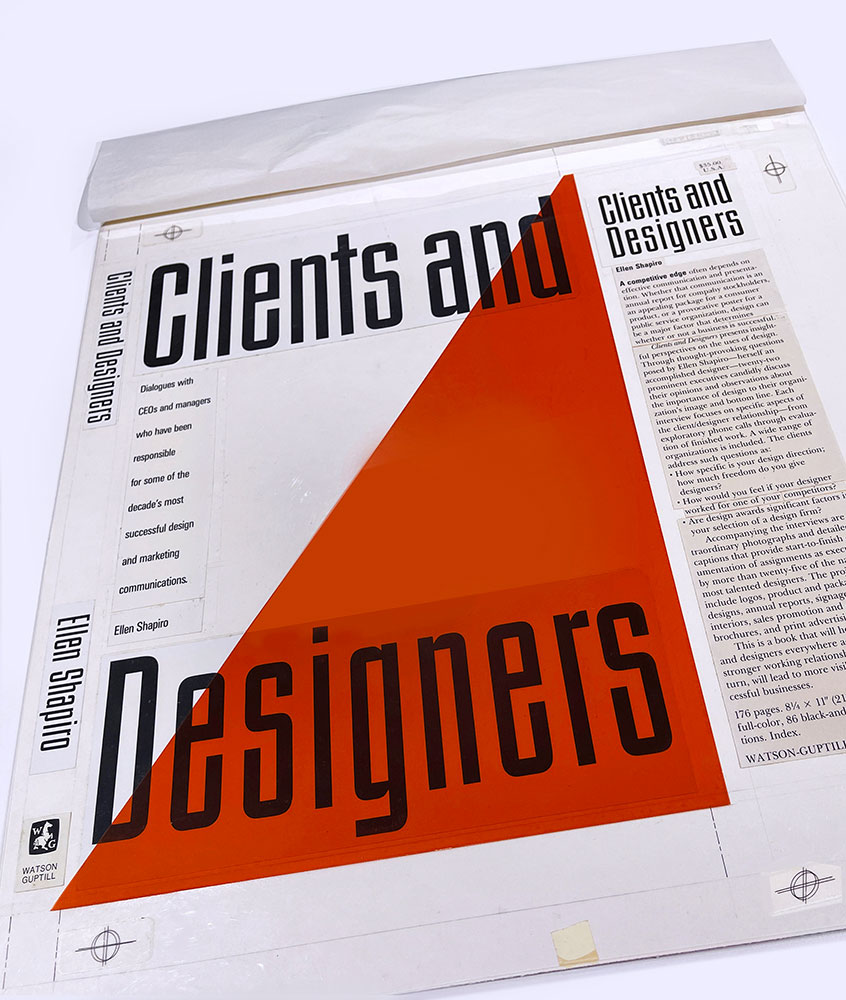
The computer was being recognized as a potential design tool, but every project, every page, still required a “mechanical” with carefully hand-aligned and pasted type galleys, layers of acetate to separate colors, with registration and crop marks. The tools were X-acto knife, Rapidograph pen, T-square, triangle, rubber cement (and thinner if you needed to make a correction or reposition something). Prepress craftsmen put the finished product together. An annual report, or presentation was often many months in the works.
Dialogues with CEOs and managers who have been responsible for some of the the decade’s most successful design and marketing communications
- Interviews with 22 international businesspeople who make the case for design as an essential strategic resource.
- 176 pages, 8 1/4 x 11, hardbound.
- Published by Watson-Guptill in 1989; continues to be relevant to all designers and anyone who wants to work successfully with a designer .
- 163 color photographs; 86 black-and-white illustrations.
Now we write, design, and produce in one seamless operation and can instantaneously send you the finished product or post it around the world.
Yet the objectives remain the same.
That’s why the information in this book is still so valuable. Five chapters of Clients and Designers are edited, illustrated versions of the panelists’ remarks. I conducted telephone and in-person interviews with 17 more clients representing a range of organizations around the country. Below are images of the pages and quotes by 12 of the clients.

April Greiman, designer; Rolf Fehlbaum, Vitra International, client:
“A good client gets good work and a bad client gets bad work. The designer and the client have to be mutually proud of working with each other. I believe in that kind of symmetry in the relationship.”

This important spread illustrates how April designs by blocking out areas for texture and color before the copy is written to fit.

Paul Rand, designer
Jonas Klein, IBM, client:
“IBM was the world’s most successful corporation and we had a good design program. In people’s minds, the design program had something to do with that success. Good design is good business in many different ways.”

Michael Vanderbyl, designer
Christian Plasman, Hickory Business Furniture, client:
“You never understand the benefit of design unless you’re standing in it. From posters to brochures to showrooms, Michael showed us how to move from project to project with consistency.”

Pentagram, designers
David Bither of Warner Communications, client:
“When we started to get favorable reaction and press about this annual report, the same guys who criticized it were carrying it around the office saying, ‘Isn’t this the most incredible thing ever?’”

Pat and Greg Samata, designers Patrice Boyer of the YMCA of Metropolitan Chicago, client:
“The Samatas are willing to exchange lower fees for creative freedom. When I show our stuff to people at the corporations we work with, they ask, ‘Who did these?’ That way, referrals happen.”

Ivan Chermayeff, designer
Sandra Ruch of Mobil Corporation, client:
“If there are creative disagreements, I can be blunt and say ‘this doesn’t work.’ Famous designers went back to the drawing board when they didn’t come up with what all of us agreed we wanted.”

Michael Weimouth, designers
Dr. David Lederman, Abiomed, Inc, client:
“Before we were a public company we issued literature where we didn’t hire a graphic designer — and it shows. Companies that think small are likely to stay small.”

Rick Valicenti, designer
Martim Zimmerman, The LINC Group, client:
“I deal directly with designers because I want them to defend themselves when I have a question. I don’t dictate, ever. Most designers are sensible enough to know when a client wants something fresh and interesting and to avoid the dull repetitious stuff that ultimately bores the reader.”

Primo Angeli, designer
Rick Berg of Treesweet Products Company, client:
“The emphasis on trying to create a richer image was to make us distinctive versus the competition. We gave Primo carte blanche, to do anything that would make us special, an alternative in the category. In terms of sales, the results were terrific.”
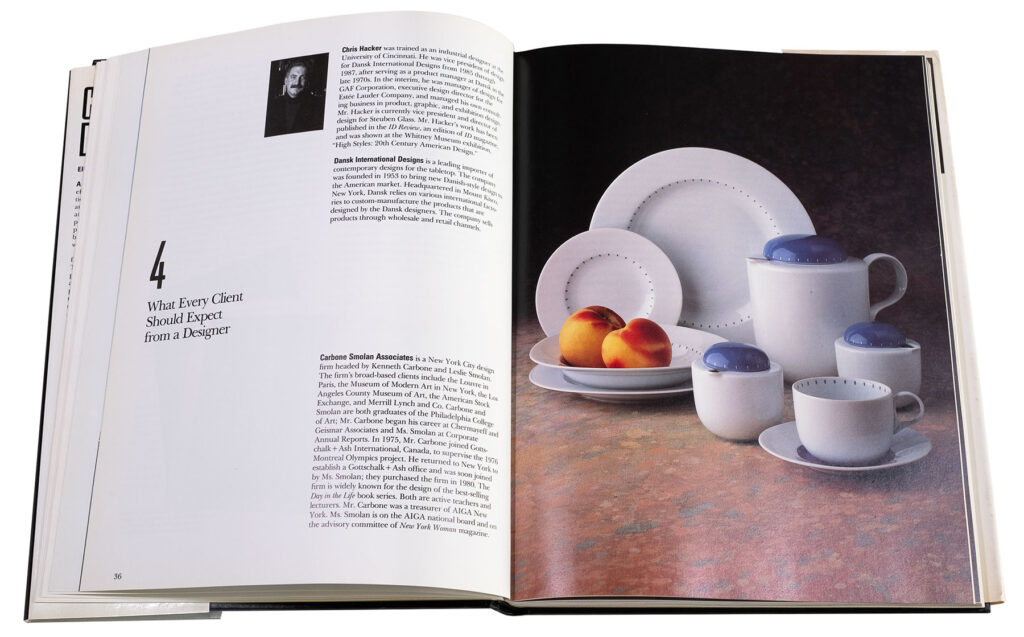
Ken Carbone and Leslie Smolan, designers
Chris Hacker of Dansk International, client:
“Nothing can be more important than having a vision of where you want to go and the kind of work you want to do. You should only work at that level and not settle for projects that show yourself at lesser advantage in terms of quality.”