
Supporting a Children’s Hospital in Africa
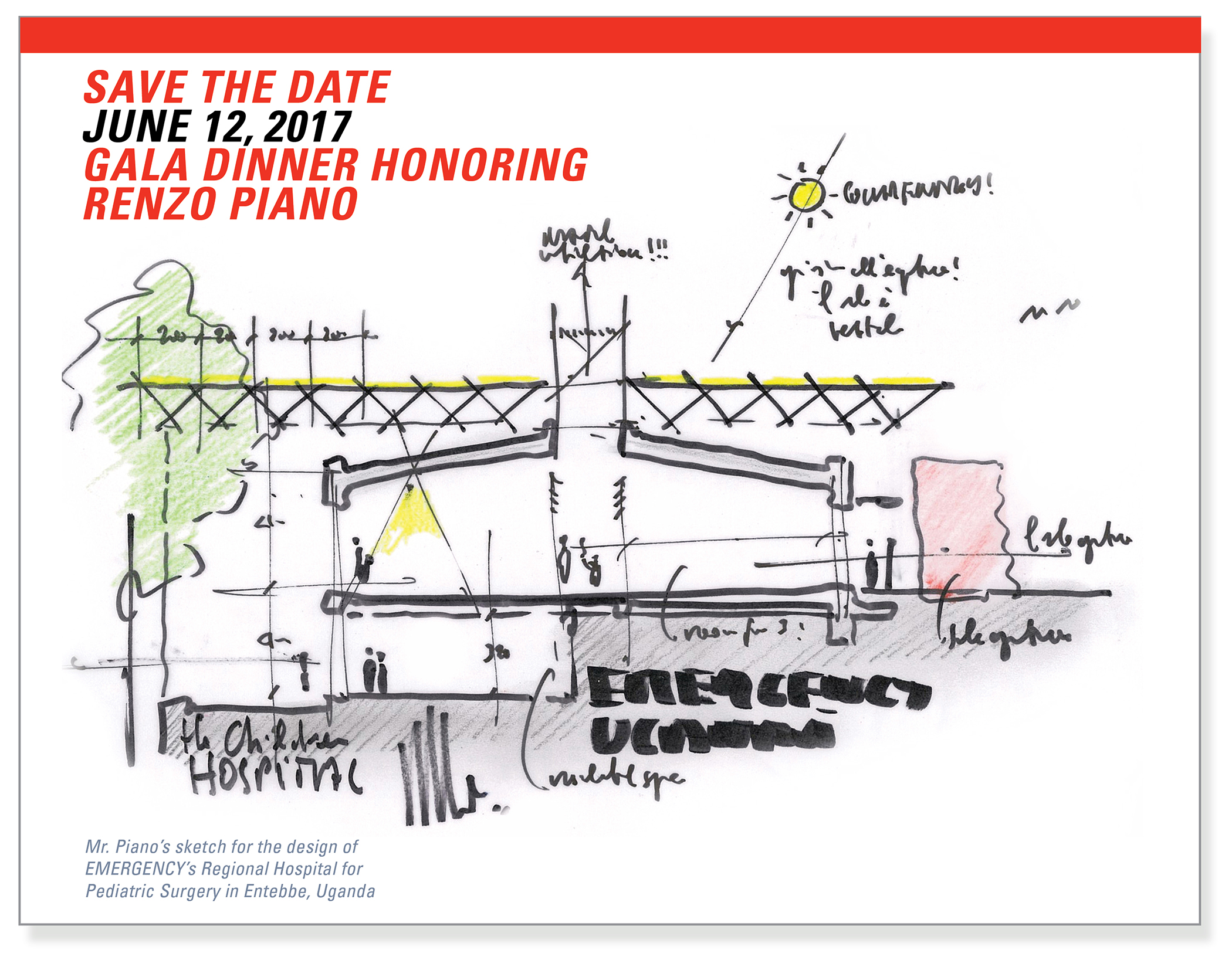
Emergency USA is a 501c3 organization that raises funds and awareness for projects that provide free, quality healthcare to victims of war and poverty. They came to Visual Language for materials that would compel donors to support Emergency’s Hospital for Pediatric Surgery in Entebbe, Uganda.

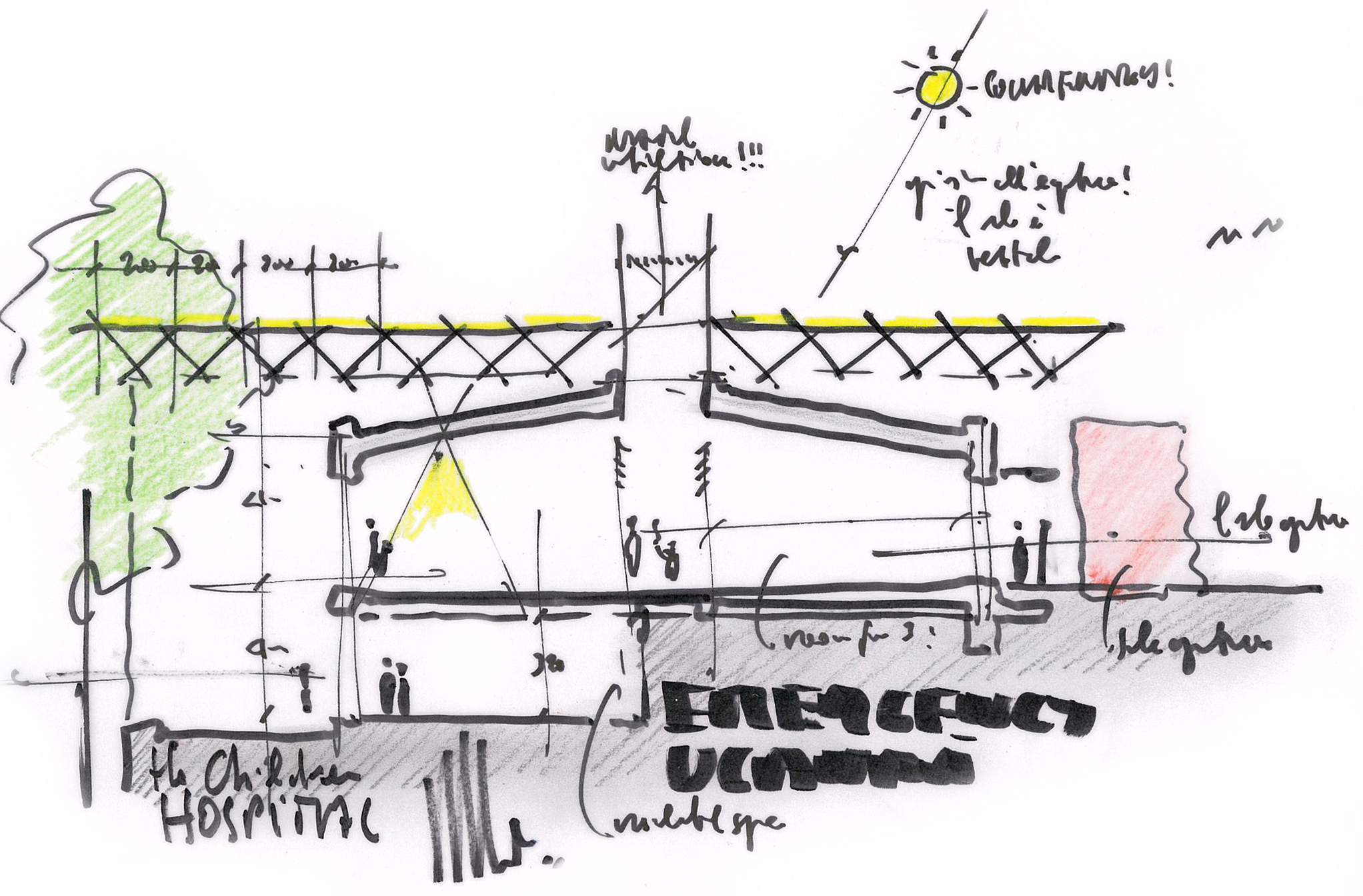
The hospital had been designed pro bono by famed architect Renzo Piano, but an additional $1.5 million was needed for construction. To create materials to attract donors, I needed to know more about Mr. Piano and the project. I fell in love with his sketches for other buildings, and he graciously made the sketch above for us to use.

A planning committee was set up for fundraising, to be kicked off at a dinner at the New York Public Library. To attract New York’s architecture community and various other movers and shakers, the materials had be bold, memorable, and include such facts as “the hospital will serve 26,000 children each year in a region where only five percent have access to surgical care.”


With a small library of images including Mr. Piano’s sketch, photography supplied by the client, and stock shots Ugandan children, the campaign was launched.


It’s satisfying to report that the hospital opened in 2021, complete with the solar roof indicated in the sketch. And it’s heartwarming to learn about everything being accomplished there — as reported and pictured on Emergency USA’s website. (Link to https://en.emergency.it/projects/uganda-entebbe-paediatric-surgery-centre.) I’m proud to have contributed a little bit to that success.
On the website, you’ll also learn about how every detail of the hospital was built with children in mind and about Mr. Piano’s concept of ‘healing architecture.’ He says. “Beauty is not just an aesthetic choice, it is part of treatment. It can have a physical and mental effect on patients and so play a part in healthcare. One of the guiding principles of the project was the idea of a hospital that was not just functional and efficient from a medical point of view, but also ‘scandalously beautiful.’ It would respect the dignity of the patients and their surroundings.”